History
Kodiak Island History
Kodiak has been inhabited for over 7,500 years. Here's the short version: Alutiiq roots, Russian America, natural disasters, and the working island of today.
Quick answer
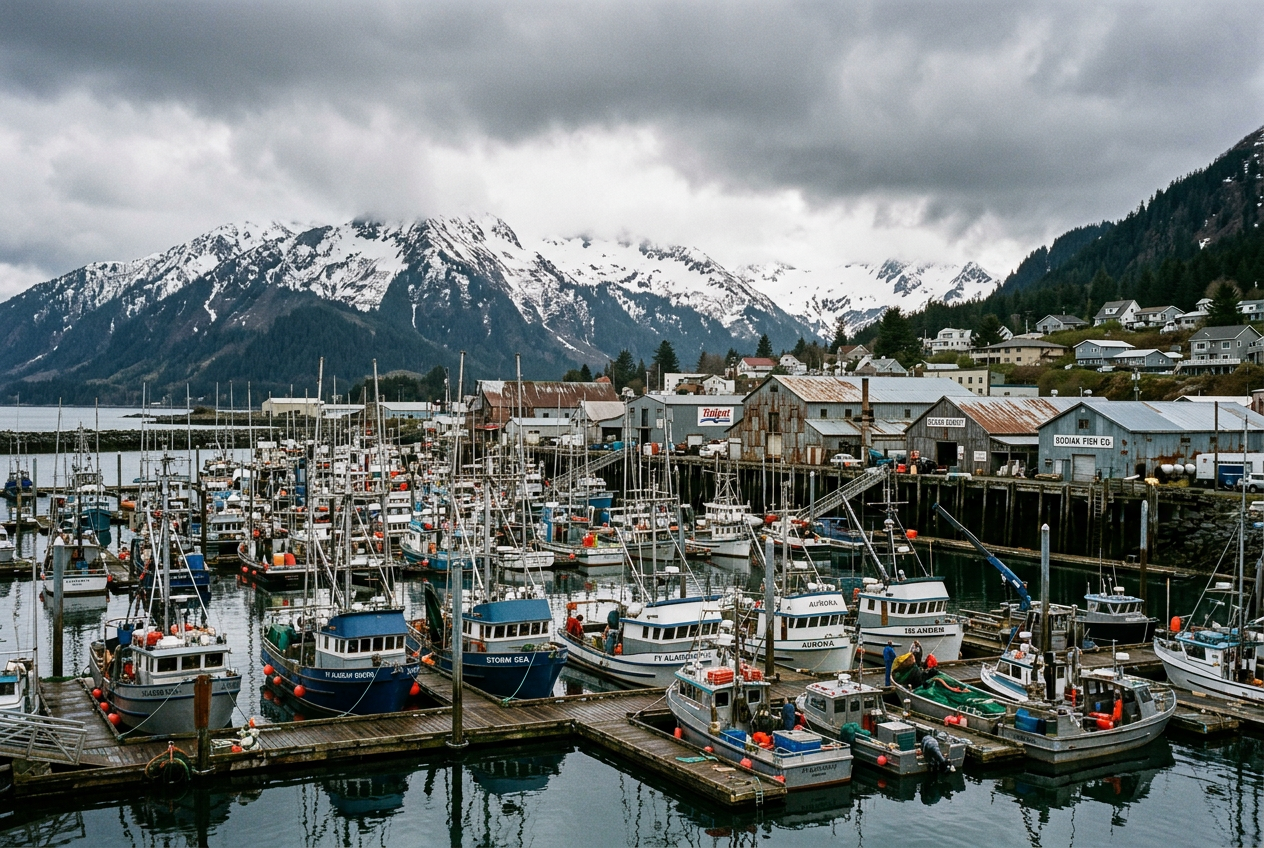
Kodiak Island was home to the Alutiiq people for 7,500+ years before Russian fur traders arrived in 1784. Kodiak became the first capital of Russian America, was buried in ash by the 1912 Novarupta eruption, occupied by the U.S. military in WWII, and struck by the 1964 tsunami. Today it's home to ~13,000 people and one of America's most productive fishing fleets.
Alutiiq origins
The Alutiiq (Sugpiaq) people have lived on Kodiak for over 7,500 years, developing sophisticated maritime hunting and fishing traditions. The Alutiiq Museum in downtown Kodiak preserves and shares this heritage.
Russian America (1784–1867)
In 1784 Grigory Shelikhov established the first permanent Russian settlement in Alaska at Three Saints Bay, later moving the base to present-day Kodiak town. It served as the first capital of Russian America.
Novarupta eruption (1912)
The largest volcanic eruption of the 20th century buried Kodiak in ash for three days, changing the ecology of the island.
WWII & Fort Abercrombie
Kodiak was a major U.S. military base during WWII. The coastal defense bunkers at Fort Abercrombie State Historical Park are among the best-preserved WWII sites in Alaska.
1964 earthquake & tsunami
The Good Friday earthquake and tsunami destroyed much of downtown Kodiak and its fishing fleet. The town was rebuilt through the late 1960s.